
Football League 2026 logo

Football League 2026 Shooting Guide: Finishing Chances Like a Striker

Master shooting in Football League 2026: shot placement, power control, finishing one on ones, and the training habits that turn chances into goals.

Rated 4.5/5 · 31k

Goals decide matches, and finishing is the skill that turns all your build up play into results. Many players reach the box often and score rarely, not because their strikers are weak, but because their shooting decisions arrive half a second late.

This guide breaks Football League 2026 shooting into learnable parts: how power behaves, where to aim in the common situations, how to finish one on ones calmly, and how to practise each finish until it survives match pressure.

Players who want the complete picture of the game around the shooting should begin with the main Football League 2026 overview and download, then return here to work on the final touch.
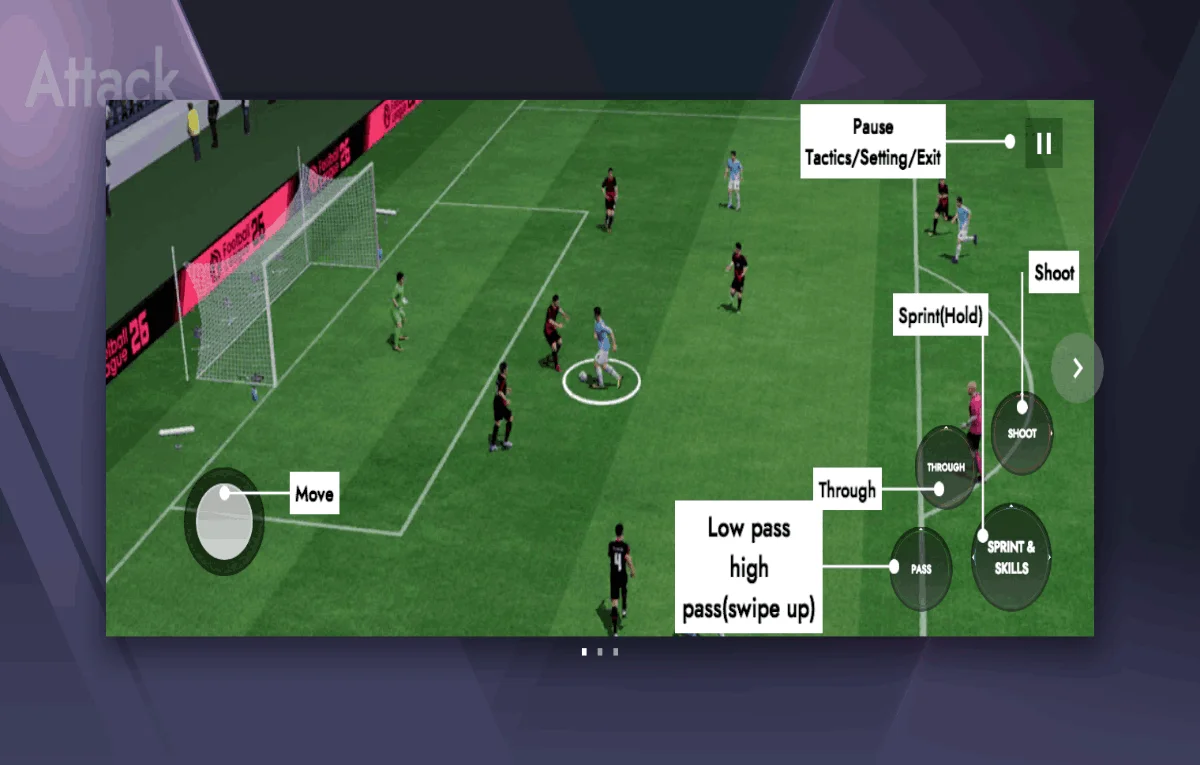

How Shot Power Really Behaves

Shot power is a trade, not a virtue. More power lifts the ball and increases the risk of skying a chance, while too little power gives the goalkeeper an easy read and an easier save. The right amount depends on distance, and distance is the first thing to read in every shooting moment.

Close to goal, placement beats power almost every time. A side footed finish into the corner needs only enough pace to beat the keeper's reach, and it stays low, which is where keepers are slowest to arrive.

From distance the balance flips: the ball needs pace to beat the keeper at all, and a rising shot becomes a weapon instead of a waste. Judge each chance by its range first, and the power decision mostly makes itself.

Placing the Ball: Corners and Keepers

Goalkeepers protect the middle by instinct and training, so corners are where finishes live. Aim for the low far corner when shooting across goal, because it combines distance from the keeper with the hardest dive in football: low, late and fully extended.

Watch the keeper's position in the half second before you shoot. A keeper who has stepped toward the near post has sold the far side, and a keeper rushing out has opened the space beside and over him for a calmer, lifted finish.

Rehearse aiming without looking at the goal. Good finishers know where the corners are from body shape and the position of the posts in peripheral vision, and that knowledge is what makes a finish fast enough to beat a closing defender. Used this way, Football League 2026 becomes a school for real football thinking, and its lessons survive every formation change.

Momentum in a football match is mostly memory: the last five minutes colour every decision in the next five. Good teams manufacture small resets, a calm passing sequence, a goalkeeper holding the ball, a senior player organising loudly, and those resets are skills that can be practised like any other part of the game.

Finishing One on Ones

The one on one is the highest value chance in football and the one players rush most. Slow down as you approach: the last two strides decide the finish, and a controlled approach lets you watch the keeper instead of the ball.

Make the keeper commit first when you can. A small change of direction or a shaped body sells a side, and finishing into the space he vacates is calmer than trying to beat a set keeper through a corner he is already covering.

If the keeper stays big and close, the low finish between or beside his feet and the lifted finish over his dive are the honest options. Football League 2026 gameplay guide and Football League 2026 tips for beginners places these finishes inside the wider attacking game, where the runs that create one on ones are built. This is also where Football League 2026 rewards patience most clearly, because the benefits compound quietly across a whole season.

Shooting From Distance

Long shots succeed when they are struck cleanly, on a still or rolling ball, with the shooter's balance over the shot rather than falling away from it. Leaning back is the single most common cause of the ball sailing into the stands.

Shoot through traffic when the keeper's view is blocked, and shoot early when a defence is backpedalling and has not set its shape. A speculative effort against a set defence mostly returns possession; the same effort against a retreating one creates rebounds and panic.

Value your long shots honestly across a match. Two or three well chosen attempts keep a defence honest and step them out toward you, which opens the passing lanes your team actually prefers to use. A careful Football League 2026 player always starts from that baseline, so a change can be credited to the decision that actually caused it.

Home and away are different sports wearing the same rules. Travel, crowd and habit all tilt small percentages, and small percentages are the currency matches are settled in. Squads built with both versions in mind, rather than one idealised version, stop donating points in the fixtures nobody highlights.

Headers and Volleys in the Box

Aerial finishes reward timing over jumping height. Meet the ball at the top of your jump, attack the space rather than waiting under the cross, and head downward whenever you can, because a downward header bounces beyond the keeper's recovery.

Volleys are about stillness: let the ball come to your foot, keep the knee over it, and accept a controlled contact over a spectacular swing. The highlight finishes look violent; the reliable ones look almost gentle at the moment of contact.

Crosses deserve a word to the crosser inside every striker: an early cross into space suits a runner, a floated cross suits nobody against a set keeper. Finishers and crossers improve together or not at all. The same discipline applies across Football League 2026: change one thing, watch honestly, and write down what the match actually said.

A Finishing Practice Routine

Practise three finishes per session: the low far corner from the edge of the box, the one on one against a rushing keeper, and the first time finish from a cut back. Rotate them in short sets, and always finish the set rather than quitting on a miss.

Add a defender's pressure gradually. Finishing unopposed teaches contact; finishing against a closing challenge teaches the speed of decision that matches demand, and the second skill is the one that transfers.

End sessions with penalties and close range finishes at full focus. Tired finishing is match finishing, because chances late in games arrive on tired legs, and the calm you practise tired is the calm you will own then. Players who approach Football League 2026 as a long campaign tend to build these habits early, and their squads show it by spring.

Football games are won in the spaces between the obvious moments: the midfielder's first touch that turns pressure into a pass, the full back's starting position that kills a counter before it breathes, the striker's curved run that drags a centre back two metres from where the cross will land. Training your eyes for those moments is the deepest skill any of these guides can offer, because the obvious moments take care of themselves.

Frequently Asked Questions

Read the distance first, then choose placement over power close to goal and cleaner power from range. Aiming for the low corners, especially the far corner across the keeper, converts more chances than any other single habit.

Leaning back and using maximum power are the usual causes. Keep your body over the ball, reduce power at close range, and let placement do the work the power was trying to do.

Approach under control, watch the keeper rather than the ball, and make him commit before you finish. A calm, placed finish beats a rushed powerful one in almost every one on one situation.

Yes, when it includes pressure and tired legs. Rehearsing the same three finishes under gradually harder conditions builds decisions your hands remember when a real chance arrives.

Conclusion

Finishing is a chain of small decisions: read the distance, watch the keeper, choose placement or power, and strike with a body shape you have rehearsed. Break the chain into parts, practise the parts, and the goals follow.

Keep your shooting honest across a whole season of matches. The strikers who score steadily are rarely the ones with the hardest shot; they are the ones whose choices stay calm in the half second that decides everything.

Marco Rossi

Reviewed by

Marco Rossi

Football Games Reviewer

Marco tests football games on real Android devices, playing full matches and career weeks to check controls, tactics and performance before any game is listed here.

More about Marco Rossi